Views: 32 Author: Site Editor Publish Time: 2026-03-25 Origin: Site
Tropical houseplants have become increasingly popular in homes across North America and Europe. Yet many plant owners struggle with yellowing leaves, brown tips, curling foliage, or stalled growth.
In most cases, the problem is not the plant itself. It is a misunderstanding of proper tropical plant care.
Tropical plants evolved in warm, humid, and stable environments. When we bring them indoors, we must recreate that microclimate as closely as possible. This guide explains how to manage light, humidity, watering, temperature, and seasonal adjustments to help your plants thrive.
Most tropical plants originate from regions with:
Average humidity levels of 60%–80%
Stable temperatures between 65°F–85°F (18°C–29°C)
Filtered sunlight beneath forest canopies
Well-draining yet consistently moist soil
The defining characteristics are stability, warmth, and high humidity without direct sun exposure.
Typical indoor conditions differ significantly:
| Factor | Common Indoor Condition |
|---|---|
| Winter humidity | 20%–35% |
| Light | Direct sun or insufficient light |
| Airflow | Forced air from HVAC systems |
| Temperature | Noticeable daily fluctuations |
These differences explain why many indoor growers struggle with tropical plant care, especially during winter months.
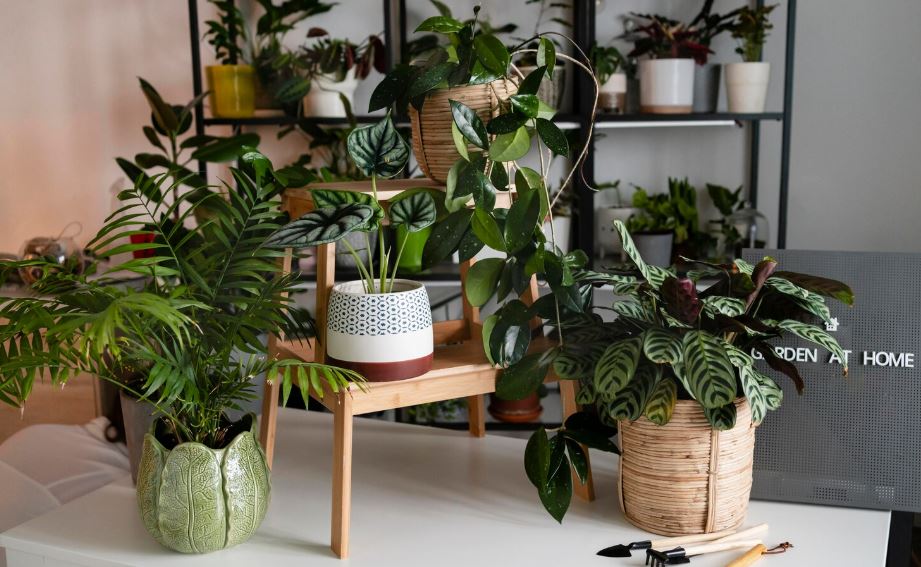
In tropical plant care, “bright indirect light” is one of the most important concepts. It means:
Placing plants near a window without direct sun exposure
Using sheer curtains to diffuse sunlight
Choosing east-facing or filtered south-facing windows
Leggy growth
Pale or smaller leaves
Slow development
Leaning toward light sources
Scorched leaf edges
Brown or bleached spots
Rapid moisture loss
While lighting is essential, it is only one part of a balanced care strategy.
Humidity is often the missing piece in successful tropical plant care.
Recommended range: 50%–70% relative humidity
Below 40% may cause stress
Above 75% may increase fungal risks
Most indoor homes, especially in winter, fall well below this range.
Brown leaf tips
Curling leaves
Crispy edges
Slower growth
These symptoms are particularly common during heating season.
Mold growth
Fungal infections
Root rot in poorly ventilated conditions
The key is stable humidity, not excessive moisture.
Monitor relative humidity consistently rather than guessing.
Plants release moisture through transpiration, which helps create a localized humid environment.
In dry climates or winter conditions, controlled humidification is often necessary. A reliable air care system provides steady humidity levels instead of short-term spikes from misting.
As a manufacturer focused on comfort and healthy indoor air, Smillon emphasizes that consistent humidity control is far more effective than occasional leaf spraying.

Tropical plants prefer moist conditions, but their roots still require oxygen. When soil remains waterlogged:
Roots suffocate
Harmful bacteria multiply
Root rot develops
Check if the top 1–2 inches of soil are dry
Adjust frequency based on season
Always ensure proper drainage
Ideal potting mix should provide:
Good aeration
Organic matter retention
Effective drainage
Amending soil with perlite, bark, or coarse material improves airflow around roots.
Maintain indoor temperatures between 65°F and 85°F (18°C–29°C).
Avoid:
Placing plants near heating vents
Exposing them to cold drafts
Sudden temperature changes
Consistency is essential for healthy growth.
Increase ambient humidity
Reduce watering frequency
Supplement light if necessary
Prevent harsh direct sunlight
Improve air circulation
Adjust watering as evaporation increases
Understanding seasonal shifts is a critical part of long-term tropical plant care success.

Ignoring humidity levels
Watering on a fixed schedule without checking soil
Misjudging light intensity
Frequently relocating plants and disrupting stability
A stable indoor microclimate is more important than constant intervention.
What humidity do tropical plants need?
Most thrive between 50% and 70% relative humidity.
Do tropical plants need a humidifier?
In dry climates or heated homes, a humidifier is often beneficial.
Can tropical plants survive in dry climates?
Yes, but supplemental humidity is usually required.
Is misting enough?
Misting provides only temporary surface moisture and does not significantly raise ambient humidity.
Successful tropical plant care depends on four core principles:
Stable humidity
Bright indirect light
Proper watering practices
Consistent temperatures
Indoor plant health is not just about watering schedules. It is about creating a balanced indoor environment that supports natural growth patterns.
By understanding and managing your home’s microclimate, you can transform indoor spaces into thriving tropical environments year-round.
Interested in partnering with a trusted humidifier manufacturer? Connect with us at Jelly.wang@smillon.com to discuss OEM or ODM opportunities.