Views: 32 Author: Site Editor Publish Time: 2026-07-30 Origin: Site
If you're looking for the best humidifier for a large room, the answer isn't a specific brand or model—it's a humidifier that can consistently maintain comfortable humidity across your entire space rather than just the area around the device.
For most large rooms, that means choosing a humidifier with sufficient moisture output, accurate humidity control, a large water tank, and coverage that matches your room's actual conditions. A model that's perfect for a bedroom may struggle in an open-plan living room, even if both spaces have similar square footage.
Instead of relying on marketing claims, this guide explains how to evaluate large-room humidifiers based on the factors that actually affect performance, helping you choose a model that works in real-world conditions.
One of the biggest reasons people end up with an underperforming humidifier is misunderstanding what manufacturers mean by "large room."
There is no universal industry definition. One brand may classify a 400 sq ft room as large, while another reserves that label for spaces over 700 sq ft. Because of this inconsistency, relying solely on the advertised coverage area can be misleading.
As a general guideline:
Up to 200 sq ft (19㎡): Small bedroom or office
200–400 sq ft (19–37㎡): Standard bedroom or nursery
400–700 sq ft (37–65㎡): Large bedroom, living room, or studio apartment
700+ sq ft (65㎡+): Open-plan living areas, lofts, or commercial spaces
However, floor area is only part of the equation.
A 500 sq ft living room with vaulted ceilings contains significantly more air than a 500 sq ft bedroom with an 8-foot ceiling. Likewise, a room connected to a kitchen or hallway loses moisture much faster than an enclosed room with the door closed.
That's why experienced buyers look beyond square footage and evaluate the overall environment before selecting a humidifier.

Many people assume that buying a humidifier labeled "large room" is enough. In reality, maintaining comfortable humidity in a larger space is much more challenging than simply producing more mist.
Several environmental factors continuously reduce indoor humidity.
Humidity is the amount of water vapor suspended in the air. As the volume of air increases, the amount of moisture required to raise the humidity level increases as well.
For example, increasing humidity from 30% to 45% in a compact bedroom requires far less moisture than achieving the same change in a spacious living room.
A humidifier with insufficient output may produce visible mist, yet have little measurable impact on the room's overall humidity.
Large rooms often have better air circulation than smaller spaces.
Ceiling fans, HVAC systems, open staircases, frequently opened doors, and connected hallways constantly move air throughout the home. While good airflow improves comfort, it also disperses moisture before it can accumulate.
This is one reason why users sometimes notice comfortable humidity only when sitting close to the humidifier.
Indoor air naturally becomes drier during winter because cold outdoor air contains less moisture.
Once this air is heated indoors, its relative humidity drops even further.
If your heating system runs throughout the day, your humidifier isn't simply adding moisture—it is continuously replacing the moisture being lost.
For homes in colder climates, choosing a humidifier with enough output for continuous operation becomes even more important.
When comparing products, many shoppers focus on appearance, smart features, or customer ratings. While these factors have value, they don't determine whether a humidifier can effectively humidify a large space.
The following five characteristics have a much greater impact on real-world performance.
One of the most common misconceptions is that a larger water tank automatically means a more powerful humidifier.
In reality, tank capacity only determines how long the humidifier can operate before needing a refill.
The specification that determines humidification performance is moisture output, usually measured in milliliters per hour (ml/h).
For example:
Around 250–350 ml/h is generally suitable for small bedrooms.
400–600 ml/h performs well in medium-sized living spaces.
600–800 ml/h is often recommended for larger residential rooms.
800 ml/h or higher is typically better suited to expansive living areas, open-plan layouts, or particularly dry environments.
Two humidifiers may both have 6-liter water tanks, but if one produces twice as much moisture per hour, it will reach your target humidity much faster.
When evaluating products, moisture output should always take priority over water tank capacity.
Coverage specifications are helpful, but they should never be treated as absolute.
Manufacturers typically measure coverage under controlled laboratory conditions with ideal airflow, stable temperatures, and minimal moisture loss.
Real homes rarely match these conditions.
If your room has:
high ceilings,
poor insulation,
frequent door openings,
central heating,
or dry winter air,
the effective coverage will almost always be smaller than the advertised maximum.
Rather than purchasing a humidifier rated exactly for your room size, choosing one with a reasonable performance margin usually produces better long-term results.
Many people assume that producing more mist always leads to better performance.
In reality, maintaining a stable humidity level is more important than producing the highest possible output.
A quality large-room humidifier should include a built-in humidistat that continuously monitors indoor humidity and automatically adjusts mist output as conditions change.
This offers several advantages:
Prevents excessive humidity.
Reduces unnecessary water consumption.
Improves energy efficiency.
Maintains a more comfortable indoor environment throughout the day.
Instead of running at maximum power continuously, the humidifier responds to the room's actual needs.
This automatic adjustment becomes increasingly important as room size grows and environmental conditions fluctuate.
A powerful humidifier isn't very practical if it needs refilling every few hours.
For large rooms, extended runtime matters because maintaining consistent humidity is generally more effective than repeatedly allowing humidity levels to rise and fall.
Several factors contribute to longer uninterrupted operation:
Larger water tank
Adjustable mist levels
Automatic humidity control
Efficient water consumption
For users who operate a humidifier overnight or throughout the workday, longer runtime often improves the overall ownership experience just as much as high moisture output.
Many buyers pay close attention to specifications before purchasing but overlook the maintenance requirements afterward.
This is one of the most common reasons humidifiers stop being used after only a few months.
Large-room humidifiers process significant amounts of water each day, making routine cleaning especially important.
Look for features such as:
Wide top-fill openings
Removable water tanks
Smooth internal surfaces
Accessible water pathways
Replaceable filters (when applicable)
A humidifier that takes only a few minutes to clean is far more likely to be maintained properly than one with a complicated design.
Proper maintenance not only extends the lifespan of the unit but also helps ensure consistent humidification performance over time.
One of the most effective ways to choose a humidifier is to start with your room—not the product packaging.
Before comparing brands, ask yourself a few practical questions:
Is the room enclosed, or does it connect to other living areas?
Does your home use forced-air heating during winter?
How high are the ceilings?
Do you usually keep doors open?
Is the climate naturally dry, or only seasonally dry?
The answers to these questions influence how much moisture your room actually needs.
For example, an enclosed 450 sq ft bedroom in a mild climate may perform well with a mid-range humidifier. In contrast, a similarly sized open-plan living room in a cold, heated home may require substantially higher moisture output to achieve the same comfort level.
Understanding your environment first makes it much easier to narrow down the right humidifier—and helps avoid the common mistake of buying a model that looks impressive on paper but struggles in everyday use.
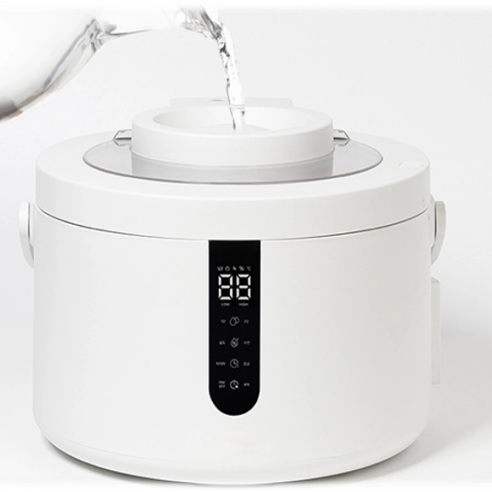
One of the most common questions buyers ask is whether they should choose an ultrasonic, evaporative, or warm mist humidifier. The truth is that there isn't a universally "best" technology. Each type performs differently depending on the room, climate, and user preferences.
Instead of asking which type is better overall, ask which type is better for your environment.
Ultrasonic humidifiers use high-frequency vibrations to break water into microscopic droplets, creating a cool mist that is released into the air.
They have become one of the most popular choices for large residential rooms because they combine high moisture output with low energy consumption and nearly silent operation.
Best for
Large bedrooms
Living rooms
Home offices
Homes where quiet operation is important
Advantages
Very low operating noise
High humidification efficiency
Low power consumption
Often available with larger water tanks and smart controls
Considerations
Performance depends heavily on water quality. In areas with hard water, some ultrasonic humidifiers may produce fine mineral particles, commonly referred to as "white dust." Using filtered or demineralized water—or choosing a model with an effective filtration system—can significantly reduce this issue.
For most households looking to humidify a large room quietly and efficiently, a high-output ultrasonic humidifier remains one of the strongest options.
Evaporative humidifiers work differently. Instead of producing visible mist, they draw air through a wet wick filter, allowing water to evaporate naturally before circulating the humidified air throughout the room.
Because evaporation slows as indoor humidity rises, these humidifiers naturally reduce moisture output as the room approaches the desired humidity level.
Best for
Large family rooms
Open-plan spaces
Homes running central heating for long periods
Advantages
Lower risk of over-humidification
No white dust
Even humidity distribution
Suitable for continuous daily operation
Considerations
The built-in fan produces some operating noise, making these units slightly louder than ultrasonic models. In addition, wick filters require periodic replacement, adding to ongoing maintenance costs.
If maintaining stable humidity throughout the day is your priority, evaporative humidifiers are often an excellent long-term choice.
Warm mist humidifiers heat water before releasing moisture into the air.
Many people prefer them during winter because the warm vapor can create a more comfortable indoor environment, especially when temperatures drop.
Best for
Cold climates
Winter use
Bedrooms where warm mist is preferred
Advantages
Comfortable warm moisture
Reduced mineral dispersion
Can make rooms feel warmer during winter
Considerations
Warm mist models generally consume more electricity because they heat the water. They also produce moisture more slowly than many high-output ultrasonic humidifiers, making them less suitable as the sole humidifier for very large spaces.
When comparing humidifiers online, it's easy to become distracted by long feature lists. However, not every feature improves performance in a large room.
Some features genuinely improve the user experience, while others have little impact on humidification.
Automatic Humidity Control
This is one of the most valuable features for large-room humidifiers.
A built-in humidistat measures the room's humidity and adjusts the mist output automatically, helping maintain a comfortable humidity level without constant manual adjustments.
Large Top-Fill Water Tank
Large rooms require longer operating times.
A top-fill design makes refilling quicker and more convenient, especially for water tanks with capacities of 5 liters or more.
Multiple Mist Levels
Indoor humidity changes throughout the day.
Being able to adjust the output allows the humidifier to perform efficiently under different weather conditions and room occupancy levels.
Easy-to-Clean Design
No matter how advanced a humidifier is, it won't perform well if regular cleaning becomes a chore.
Wide tank openings, removable components, and smooth internal surfaces can save significant maintenance time over the life of the product.
Sleep Mode
For bedroom use, sleep mode reduces operating noise and dims display lights, creating a more comfortable sleeping environment while maintaining healthy humidity overnight.
Some features look impressive but contribute little to humidification performance.
Examples include:
Decorative ambient lighting
Large touchscreens
Voice assistant compatibility
Mobile app control (for users who rarely use smart home systems)
These features may improve convenience but should never take priority over moisture output, humidity control, or coverage.
Understanding what not to do can save both money and frustration.
A larger tank allows longer runtime, but it doesn't tell you how effectively the humidifier adds moisture to the air.
Always compare moisture output before comparing tank size.
Coverage ratings usually represent ideal testing conditions.
If your room has high ceilings, continuous heating, or open connections to other spaces, choose a model with additional capacity instead of matching the published maximum exactly.
Humidity needs vary greatly by location.
Homes in dry continental climates often require significantly more humidification than homes in naturally humid coastal regions.
Your local environment should influence your buying decision just as much as room size.
Every humidifier requires routine cleaning.
Choosing a model that's difficult to clean often results in neglected maintenance, reduced efficiency, unpleasant odors, and a shorter product lifespan.
Ease of maintenance should be considered before purchase—not after.
What is the best humidifier for a large room?
The best humidifier is one that can maintain consistent indoor humidity across your entire room rather than simply producing a large amount of visible mist. Look for a model with sufficient moisture output, reliable humidity control, and coverage that exceeds your room's actual requirements.
Is a higher mist output always better?
Not necessarily.
Higher output helps in larger or drier spaces, but excessive moisture can lead to condensation or discomfort if the humidifier lacks automatic humidity control. A balance between output and intelligent regulation usually delivers the best results.
Can one humidifier cover an open-plan living space?
It depends on the size and layout.
A powerful humidifier may effectively cover many open-plan living areas, but very large spaces or homes with continuous airflow may require either a higher-capacity model or multiple units placed strategically.
What indoor humidity level is considered comfortable?
Most indoor comfort and health experts recommend maintaining relative humidity between 40% and 60%. This range helps reduce dry skin, throat irritation, and static electricity while minimizing the risk of excessive moisture.
Should I choose ultrasonic or evaporative for a large room?
If quiet operation, energy efficiency, and fast humidification are your priorities, an ultrasonic humidifier is often the better choice.
If you prefer natural humidity regulation and plan to run the humidifier continuously throughout the day, an evaporative model may be more suitable.
The right choice depends on your environment and maintenance preferences rather than the technology alone.
Finding the best humidifier for a large room isn't about choosing the model with the biggest water tank or the most advanced features. It's about selecting a humidifier that matches your room's actual conditions and can maintain a healthy humidity level consistently over time.
Before making a purchase, evaluate your room size, ceiling height, climate, heating system, and daily usage habits. Once you understand these factors, comparing humidifiers becomes much easier, and you're far more likely to invest in a model that delivers reliable, long-term performance instead of short-term satisfaction.
For businesses developing their own humidifier brand, working with an experienced OEM/ODM manufacturer is equally important. Beyond product specifications, factors such as humidification performance, engineering expertise, quality control, and customization capabilities all contribute to the long-term success of a product in the market.
As an experienced humidifier manufacturer, Smillon provides OEM and ODM solutions for global brands, retailers, and distributors. From high-output ultrasonic humidifiers for large rooms to customized air care products, Smillon helps partners develop reliable products tailored to different markets and customer needs.
Looking for a reliable OEM/ODM humidifier manufacturer? Contact our team at Jelly.Wang@smillon.com to discuss your project, request product information, or explore customized air care solutions.